Why is my garage door making a loud grinding noise
A loud grinding garage door in Princeton TX is usually dry rollers, worn nylon wheels, or a failing opener gear. Here's how to diagnose it fast.
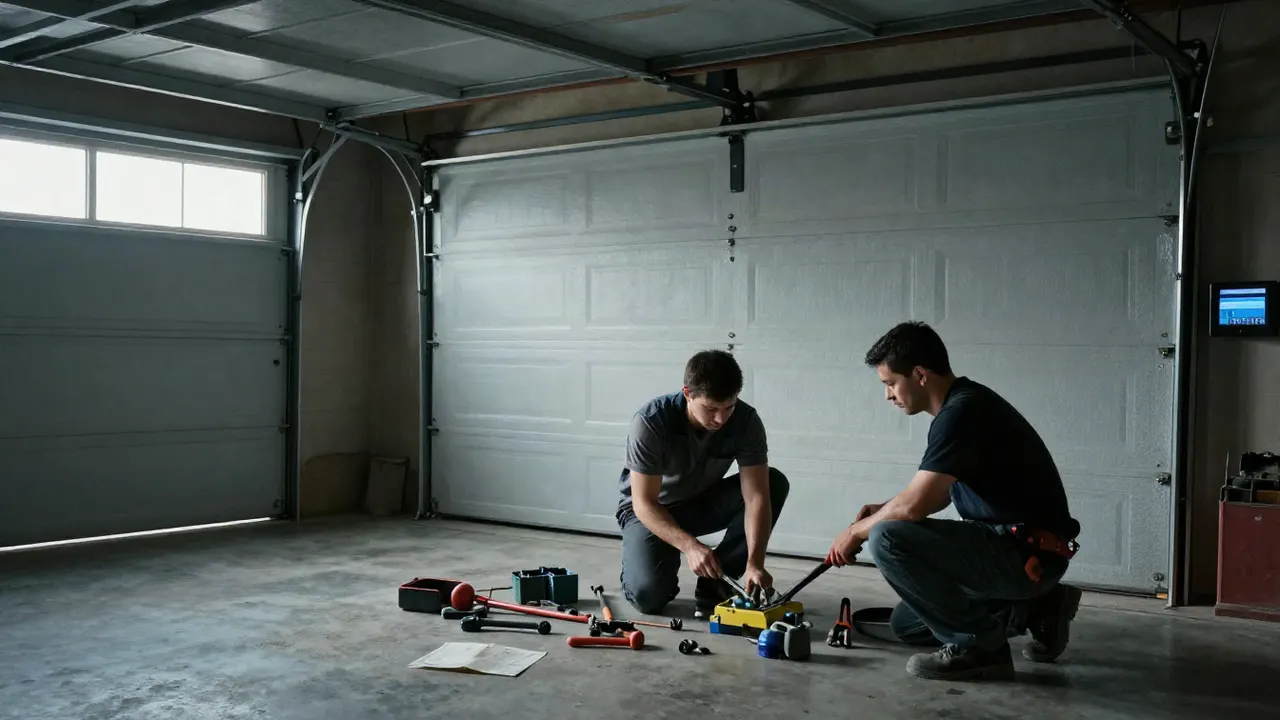
A loud grinding noise from your garage door almost always comes from metal-on-metal friction at the rollers, the torsion hardware, or the opener's drive gear - and it will not fix itself. In Princeton, TX, the most common culprit we find on service calls is dry steel rollers grinding against a steel track, followed closely by a stripped nylon gear inside the opener motor. The rest of this post breaks down each cause, how to tell them apart in under five minutes, what a repair costs in 2026, and when it is time to stop guessing and call someone.
Why is my garage door making a loud grinding noise Princeton TX is one of the most common questions we hear from homeowners along Highway 380 and the rapidly growing neighborhoods off Monte Carlo Boulevard. The answer is rarely a mystery once you know where to look.
What a Grinding Noise Actually Tells You
A grinding noise is the sound of two hard surfaces rubbing together that were never meant to touch - it is friction, not vibration, and that distinction matters. A rattle or a bang points to loose hardware or a broken spring. A grind points to abrasion, and abrasion wears parts down fast.
For context, a garage door grinding noise Princeton is a symptom, not a diagnosis. The same low, gravelly sound can come from a $12 roller, a $45 opener gear, or a $200 torsion assembly. That is why we always run the door by hand with the opener disconnected before we quote anything.
Here is the definitional version for anyone searching this for the first time: a garage door grinding noise in Princeton TX is an audible friction symptom that signals worn rollers, dry bearings, misaligned tracks, or a failing opener drive system, and it typically appears after 5 to 10 years of daily use.
The Six Most Common Causes of Garage Door Grinding in Princeton TX
Across the hundreds of doors we service each year in Princeton, six causes account for nearly every grinding complaint. We rank them below by how often we actually find them on site.
1. Worn or Dry Steel Rollers
Standard steel rollers have sealed bearings that dry out after about 7 years. Once the grease is gone, the roller's metal shaft grinds inside its metal housing every time the door moves. You will hear it as a steady, low grind that gets worse toward the top of the travel.
2. Nylon Roller Wheels That Have Flat-Spotted
Nylon rollers run quieter than steel - until the wheel develops a flat spot from sitting in one position through a hot Texas summer. Princeton sees 100°F+ days in July and August, and that heat softens nylon. A flat-spotted wheel produces a rhythmic grind-grind-grind that matches the door's speed.
3. A Stripped Drive Gear in the Opener
If the grind comes from the ceiling unit itself rather than the door, the nylon drive gear inside your opener has likely stripped. This is the single most common opener failure we see on LiftMaster and Chamberlain units between 8 and 12 years old. The motor spins, the gear slips, and you get a loud grinding noise from garage door opener Princeton homeowners describe as 'a blender full of gravel.'
4. Misaligned or Pinched Track
A track that has been bumped by a car, a trash bin, or a basketball will pinch the rollers and force metal against metal. You can usually spot this by eye - look for a bend or a gap that is wider on one side than the other.
5. Dry Torsion Spring Bearings
The center bearing plate and the end bearing plates on your torsion tube need a light coat of lubricant every year. When they run dry, the torsion tube grinds against the bearing as it turns. This one is easy to misdiagnose as a roller problem.
6. Debris in the Track
Small rocks, dried leaves, and grit collect in the bottom curve of the track. In Princeton, where new construction is constant, we frequently pull drywall dust and concrete grit out of tracks on homes less than two years old.
What Causes a Garage Door to Make a Loud Grinding Noise in Princeton TX?
A garage door makes a loud grinding noise in Princeton TX when metal parts that should be separated by grease, nylon, or a bearing lose that barrier and start rubbing. That is the short answer. The long answer is that four specific failure points produce 90% of the grinding calls we run.
- Rollers: dry bearings or flat-spotted nylon wheels
- Opener: stripped nylon drive gear or worn chain sprocket
- Track: misalignment, pinching, or debris
- Torsion hardware: dry center or end bearings
One quick test tells you a lot. Pull the emergency release cord to disconnect the opener, then lift the door by hand. If the grind is still there, the problem is in the door hardware - rollers, track, or bearings. If the door is quiet by hand but grinds when the opener runs, the problem is inside the motor unit.
We see this pattern constantly in older Princeton homes near Downtown Princeton, where original 1990s doors are still running on their first set of steel rollers. If your door is in that part of town and has never had a roller service, that is your first suspect.
If you would rather not crawl around on a ladder, our team handles Garage Door Repair Princeton TX with a same-day diagnostic on most calls.
How Do I Fix a Grinding Garage Door in Princeton Texas?
You can fix a mild grinding garage door in Princeton Texas yourself in about 30 minutes if the cause is lubrication or debris. Anything involving springs, cables, or the opener's internal gear should be handed to a technician - those parts store enough energy to break a wrist.
Here is the sequence we recommend, in order:
- Disconnect the opener using the red release cord and work the door by hand.
- Inspect the tracks for bends, gaps, and debris. Wipe the inside channel with a dry rag.
- Lubricate the rollers with a white lithium or silicone-based garage door lubricant - never WD-40, which attracts grit.
- Lubricate the torsion bearings at the center plate and both end plates.
- Run the door and listen. If the grind is gone, you fixed it. If not, note whether it comes from the door or the ceiling unit.
If the noise is coming from the opener itself, the fix is a gear and sprocket kit - a $30 part and about 45 minutes of labor for someone who has done it before. We handle that as part of our Garage Door Opener Repair Princeton TX service, and we stock the kits for the most common LiftMaster and Chamberlain models on our trucks.
One more thing worth checking: if the grind is accompanied by a snapping or popping sound, stop running the door. That combination usually means a torsion spring is about to fail, and a Garage Door Spring Repair Princeton TX call is cheaper than a dropped door.
Is a Grinding Garage Door Dangerous in Princeton?
A grinding garage door is dangerous in Princeton when the grind is coming from the torsion system, the cables, or a door that has come off its track - not when it is a dry roller. The distinction matters because the risk level is completely different.
Low-risk grinds: dry rollers, dry bearings, debris in the track, a stripped opener gear. These are annoying and will get worse, but they will not drop a 200-pound door on your car.
High-risk grinds: any grind paired with a visible gap in the torsion springs, a cable that has jumped its drum, or a door that is running crooked. A torsion spring under load holds roughly 150 to 200 foot-pounds of torque. When one snaps, it sounds like a gunshot and the door can fall within a second.
If you see any of the following, stop using the door and call a technician today:
- A visible gap in either torsion spring
- A cable hanging loose on one side
- The door rising unevenly - one side higher than the other
- Grinding combined with a burning smell from the opener
We treat those as emergency calls and prioritize them the same day across Princeton.
Common Mistakes We See Homeowners Make
The most expensive mistake we see is spraying WD-40 on the rollers and calling it fixed. WD-40 is a solvent, not a lubricant - it strips the remaining grease and leaves the roller drier than before. Two weeks later the grind is louder.
The second mistake is ignoring the opener. Homeowners hear a grind, assume it is the door, and replace all the rollers. The noise does not change because the problem was the drive gear the whole time. Always disconnect the opener and test the door by hand first.
The third mistake is tightening track bolts to 'fix' a misalignment. Tracks are set to a specific gap - usually about 1/2 inch of play between the roller and the track - and over-tightening bends the rail. We have replaced tracks that a homeowner ruined with a socket wrench.
Finally, we see people run a grinding door for months because it still opens. Every week of grinding wears the roller shafts, chews the track, and adds strain to the opener motor. A $150 roller and lube service turns into a $600 opener replacement when you wait.
When to Call a Professional
Call a professional when the grind persists after lubrication, when it comes from the ceiling unit, or when you see any sign of torsion or cable damage. Those three situations cover about 80% of the calls we run.
Our team at Garage Door Repairing Services in Princeton handles grinding diagnostics as part of a standard service visit. We disconnect the door, run it by hand, isolate the noise, and quote the fix before we touch anything. Most grinding repairs are done in a single visit because we carry rollers, bearings, gear kits, and track hardware on every truck.
If you are in the Princeton University Area and your door is grinding on a schedule - say, every morning at 7 a.m. when you leave for work - that is a strong signal the issue is in the opener drive, not the door itself. We see that pattern on a lot of homes near the university where doors cycle 6 to 10 times a day.
Book a diagnostic and we will tell you exactly what is grinding, what it costs to fix, and whether you can safely keep using the door in the meantime.
How Much Does It Cost to Fix a Grinding Garage Door in Princeton?
Typical 2026 pricing in the Princeton area runs $95 to $150 for a diagnostic and lubrication service, $150 to $300 for a roller replacement on a standard two-car door, and $250 to $450 to replace a stripped opener drive gear including the new gear and sprocket kit.
Track realignment usually lands between $150 and $350 depending on how many sections need adjustment. If the grind has damaged the torsion system, expect $300 to $550 for a spring and bearing service on a two-car door.
Here is a quick reference for what we actually bill in Princeton:
- Lube and tune with roller inspection: $95-$150
- Full roller replacement (10-12 rollers): $150-$300
- Opener gear and sprocket kit installed: $250-$450
- Track realignment or section replacement: $150-$350
- Torsion spring and bearing service: $300-$550
We quote the price before we start, and the diagnostic fee is credited toward the repair if you move forward the same day. No surprise line items.
Frequently Asked Questions
What causes a garage door to make a loud grinding noise in Princeton TX?
Dry steel rollers, flat-spotted nylon wheels, a stripped opener drive gear, misaligned tracks, and dry torsion bearings cause almost every grinding complaint in Princeton TX. The single most common cause we find is dry rollers on doors 7 to 10 years old, followed by a stripped nylon gear inside the opener motor.
How do I fix a grinding garage door in Princeton Texas?
Disconnect the opener, run the door by hand, clean the tracks, and lubricate the rollers and torsion bearings with a garage-door-specific lubricant. If the grind continues or comes from the ceiling unit, the fix is a gear kit or a hardware replacement - a 45 to 90 minute job for a technician.
Is a grinding garage door dangerous in Princeton?
It is dangerous when the grind comes from the torsion springs, cables, or a door that is running crooked - those can drop a 200-pound door without warning. A dry roller grind is not immediately dangerous, but it will wear out the track and opener if you ignore it for more than a few weeks.
Should I call a garage door repair company in Princeton TX for grinding noise?
Yes, if the noise persists after lubrication, comes from the opener, or appears alongside a visible spring gap or loose cable. A diagnostic visit typically runs $95 to $150 and is credited toward the repair, so you are not paying twice to find out what is wrong.
How much does it cost to fix a grinding garage door in Princeton?
In 2026, most grinding repairs in Princeton run $95 to $450. A lube and tune is $95 to $150, roller replacement is $150 to $300, and an opener gear kit installed is $250 to $450. Torsion-related grinding costs $300 to $550.
Get Help with Garage Door Repairing Services in Princeton
If your door is grinding and you have already tried lubrication, the next step is a proper diagnostic - we isolate the noise, quote the fix, and usually finish the same day. Call Garage Door Repairing Services in Princeton at +123456789 and we will get your door running quiet again.